
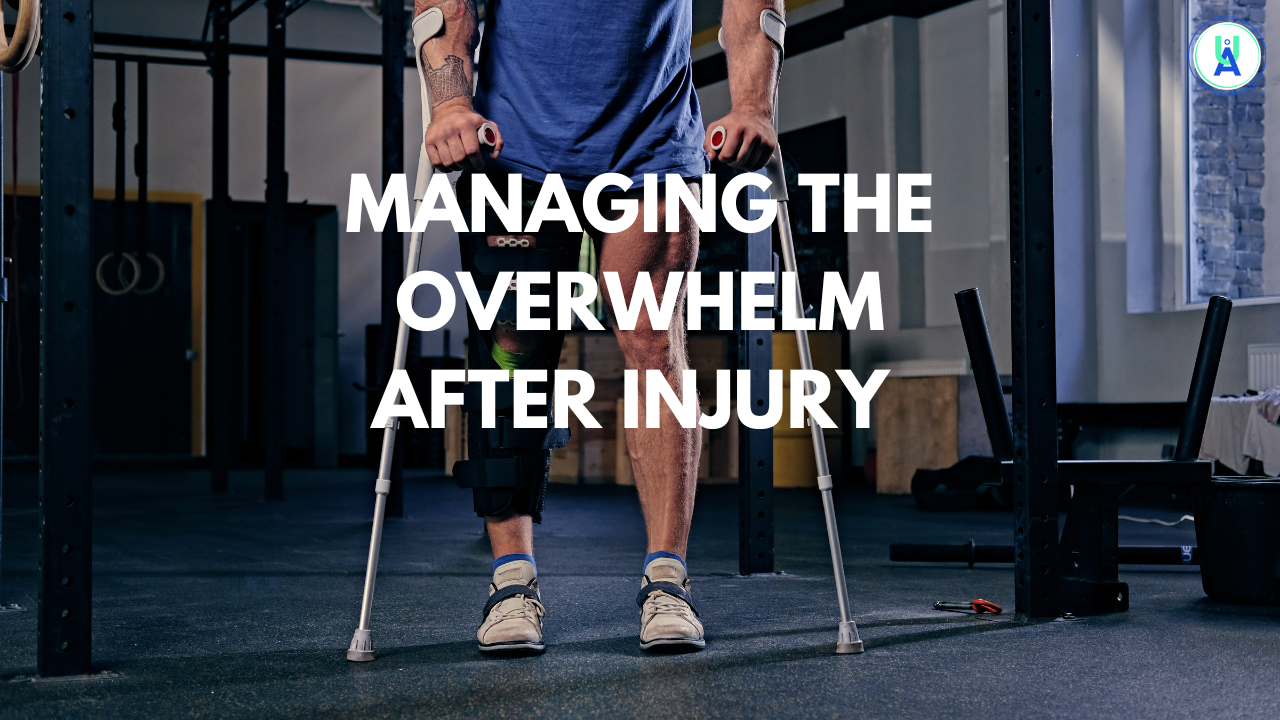
The Comeback Is Mental Too: Building a Recovery Mindset After ACL Surgery
Sep 24, 2026ACL recovery is usually measured in physical milestones.
Getting off crutches. Regaining motion. Rebuilding strength. Running. Jumping. Cutting. Returning to practice.
But there is another recovery happening alongside the physical one:
The mental comeback.
After ACL surgery, athletes may experience frustration, fear of reinjury, loss of confidence, uncertainty, and even a temporary loss of athletic identity. These aren't signs that recovery is going poorly. They're challenges that deserve attention just like strength, mobility, and movement quality.
Returning physically doesn't always mean feeling ready
One of the most important findings in ACL research is that physical and psychological readiness don't always progress at the same rate.
An athlete may demonstrate excellent strength and hop testing and still hesitate when asked to cut at full speed.
They may be cleared to practice but not trust their knee.
Or they may desperately want to return while worrying about another injury every time they plant their foot.
Psychological readiness has become an important part of ACL return-to-sport assessment. The ACL-Return to Sport after Injury scale (ACL-RSI), for example, evaluates emotions, confidence in performance, and risk appraisal related to returning to sport. Research has found that psychological readiness is associated with return-to-sport outcomes after ACL reconstruction.¹˒²
Being physically capable and feeling ready are related—but they aren't identical.
Recovery isn't linear
ACL rehabilitation can feel like a series of contradictions.
One week you feel strong.
The next week your knee swells.
You crush a workout on Monday and struggle with something simple on Thursday.
You may feel incredibly motivated at month three and completely exhausted by rehab at month six.
That doesn't necessarily mean you're moving backward.
Long recoveries naturally include fluctuations in symptoms, performance, confidence, and motivation.
Instead of asking:
“Why am I not back yet?”
Try asking:
“What does progress look like this week?”
That shift moves attention away from an outcome you can't completely control and toward actions you can.
Focus on controllables
When the final goal is returning to sport, it's easy to become obsessed with the finish line.
But ACL recovery is built through hundreds of smaller decisions.
You can control:
-
Showing up consistently to rehabilitation
-
Completing your home program
-
Fueling adequately
-
Prioritizing sleep
-
Communicating honestly with your rehab team
-
Asking questions when something doesn't feel right
-
Practicing your mental skills
-
Celebrating progress that isn't visible on the field
You cannot completely control exactly when your knee will feel normal again.
Put your energy into what you can influence today.
Fear of reinjury deserves to be trained
Fear isn't necessarily something athletes should simply “push through.”
Research has repeatedly identified fear of reinjury as an important psychological barrier following ACL reconstruction. Psychological factors—including confidence, fear, motivation, and perceived risk—can influence whether athletes successfully return to their previous level of sport.¹⁻³
That means confidence shouldn't be treated as something that magically appears when you're medically cleared.
Confidence can be rebuilt.
Start with graduated exposure.
Perform the movement slowly.
Then faster.
Add unpredictability.
Add fatigue.
Add an opponent.
Eventually, recreate the demands of sport.
At the same time, mentally rehearse those situations.
Visualize yourself cutting, landing, accelerating, competing—and responding confidently when the situation isn't perfect.
Your physical rehabilitation progressively exposes your knee to sport.
Your mental rehabilitation should progressively expose your mind to sport, too.
Don't compare your comeback
Social media makes ACL recovery look remarkably predictable.
Surgery.
Crutches.
First squat.
First run.
First jump.
Return to sport.
Real recovery rarely looks that clean.
Your teammate's six-month milestone isn't your six-month milestone.
Your previous injury isn't this injury.
And another athlete's highlight reel tells you almost nothing about what their recovery actually looked like.
Instead of comparing timelines, compare yourself with your previous self.
What can you do today that you couldn't do four weeks ago?
That's progress.
Use mental rehearsal before you return
Mental imagery is one of the most practical tools athletes can incorporate during rehabilitation.
Don't only visualize the perfect game-winning moment.
Rehearse the process.
Picture yourself walking into practice.
Putting on your equipment.
Warming up.
Running.
Jumping.
Cutting.
Reacting instead of thinking.
Then introduce adversity.
Imagine making a mistake.
Imagine feeling nervous before your first competition.
Imagine taking an awkward step—and realizing your knee is okay.
Then rehearse your response:
Breathe. Reset. Trust. Next play.
The objective isn't to convince yourself that nothing bad can happen.
It's to build confidence that you can handle what happens next.
Remember: You are still an athlete
One of the hardest parts of a major injury is feeling separated from your sport.
Practices continue.
Your teammates compete.
The season moves forward while your daily victories happen in a rehabilitation room.
But injury doesn't take away your identity as an athlete.
Your training has simply changed.
Right now, your sport may be restoring extension.
Building your quad.
Improving your landing mechanics.
Fueling recovery.
Getting enough sleep.
And training your mind.
Rehabilitation is training.
Treat it that way.
Your mindset deserves a rehab plan too
Athletes are routinely given detailed plans for rebuilding their bodies after ACL surgery.
The mental side of recovery deserves the same structure.
That's why we created Unbroken Comeback—a mindset recovery program designed to complement the physical rehabilitation athletes are already doing.
Through short audio lessons, mental rehearsal, mindfulness tools, education, and practical strategies, athletes can work on challenges such as fear of reinjury, frustration, confidence, motivation, sleep, setbacks, and preparing mentally for return to sport.
It's not a replacement for your surgeon, physical therapist, athletic trainer, or mental health professional.
Think of it as mindset rehab alongside your physical rehab—from injury through return to performance.
Our Summary....
Returning from ACL surgery isn't just about getting your knee back.
It's about rebuilding trust.
Confidence.
Patience.
Resilience.
And eventually, the ability to stop thinking about your knee and simply compete again.
Your comeback doesn't happen in one moment.
It's built through hundreds of small ones.
Train the knee. Train the body. Train the mind.
References
-
Ardern CL, Taylor NF, Feller JA, Webster KE. A systematic review of the psychological factors associated with returning to sport following injury. Br J Sports Med. 2013;47(17):1120-1126.
-
Webster KE, Feller JA. Development and validation of a short version of the Anterior Cruciate Ligament Return to Sport After Injury (ACL-RSI) scale. Orthop J Sports Med. 2018;6(4):2325967118763763.
-
Nwachukwu BU, Adjei J, Rauck RC, et al. How much do psychological factors affect lack of return to play after anterior cruciate ligament reconstruction? A systematic review. Orthop J Sports Med. 2019;7(5):2325967119845313.